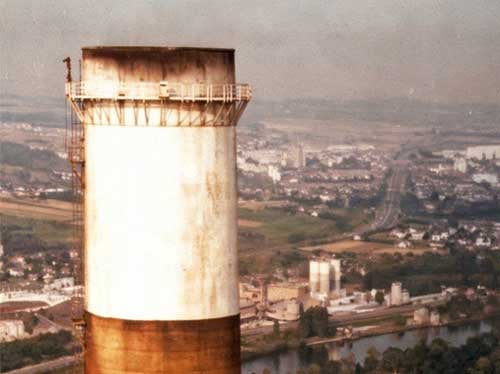
A hundred years ago, engineers built industrial sites prioritizing scale and output. Today, refineries, power plants, and heavy industry must navigate efficiency targets, environmental standards, safety requirements, and economic pressures.
CTP has supported operators across every stage of this evolution, from refractory furnaces to effluent-free, PFAS-ready solutions, adapting our expertise as industry expectations evolved decade by decade.
We were founded in France in 1926 as Compagnie Technique des Pétroles, to fill a clear market gap: support the rise of heavy industry by constructing industrial refractory furnaces and chimneys. That early expertise placed us at the core of oil and gas, power, and process facilities just as industrialization accelerated.
Over the following decades, operators faced wave after wave of transformation—from rapid capacity growth to environmental regulation, digitalization, and now the energy transition.
Through each shift, we were challenged to adapt, evolving from a furnace construction specialist to a global partner in industrial cleaning and environmental performance.
Rapid industrialization defined the early 20th Century. Refineries, furnaces, boilers, and power-generating assets expanded in size and complexity to support growing energy and production needs. The primary challenge was to build a durable infrastructure capable of sustaining continuous operation. Our furnace and chimney expertise helped customers build and maintain the thermal heart of refineries, power plants, and heavy industry. This established our long‑term focus on reliability and safety that would continue to serve customers in the decades to come.
Post-World War II, industrial activity surged and equipment complexity increased. Traditional mechanical methods could not maintain the required level of performance, leading to the emergence of industrial cleaning as a specialized discipline.
In 1954, we expanded into industrial chemical cleaning, forming the department that became CTP environnement and introducing the HUTER® process for oil-fired boilers and furnaces. This marked the start of our company's process-driven innovation, which is rooted in using tailored chemistries to improve efficiency and asset longevity.
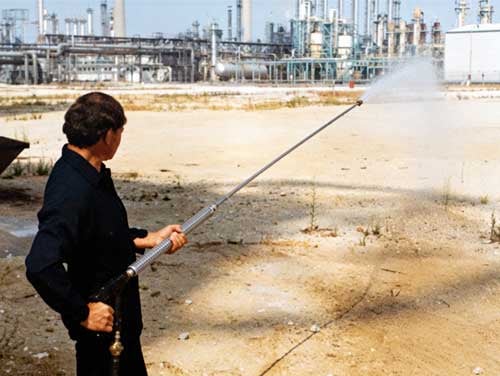
As industrial output increased around the globe, performance was no longer the only measure of success. Public concern and new environmental laws emphasized emissions, discharges, and community impact. Operators now had to demonstrate control over site outputs, not just production volumes.
This period introduced a new layer of complexity, making chemical cleaning and effluent management essential for compliance and performance. Cleaning now supported stricter discharge limits, protected treatment infrastructure, and reduced unplanned releases or unsafe interventions.
At the time, the emerging belief, which was still gaining early traction, that industrial performance and environmental responsibility were inseparable shaped the decades to come.
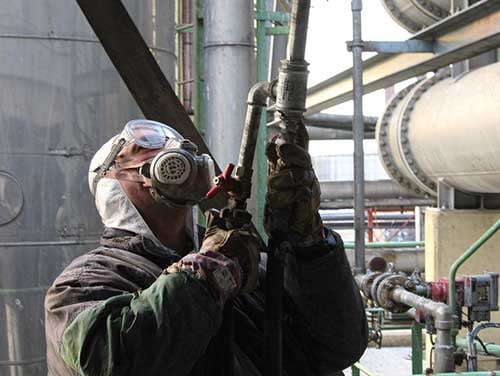
As plants grew larger and more integrated by the late 1980s, industrial priorities shifted again. Shutting down critical equipment for cleaning had become increasingly costly; operators now needed solutions that restored performance without halting production or increasing personnel risk.
We responded with specialized processes that defined modern industrial cleaning. These solutions restored heat-transfer efficiency and stabilized operations while equipment remained in service: